Thursday, November 3, 2016

Rules of Perceptual Organization: Proximity, Similarity, and Figure-Ground Perception

Proximity:
Objects that are near or 'proximate' to each other tend to be grouped together. For example, in the picture below, we group together the dots that are closest to each other.


Similarity:
We link things that are similar and treat them like a distinct group. For example, in the picture below, we group together the red roses and the white roses into two separate groups.


Figure-Ground Perception:
When we perceive a visual image, we tend to simplify it by separating it into figure and ground. The figure is the object you perceive. The ground is everything in the background. For example, in the picture below, we can see the white eagle and dot as the "figure", and the black around it is the "ground". Or we can see the black eagle and dot as the "figure" and the white around it as the "ground."


Afton Hamilton


Wednesday, November 2, 2016

depth perception

Binocular cues- visual information taken in by two eyes that enable us a sense of depth perception, or stereopsis. Includes stereopsis, eye convergence, disparity, and yielding depth from binocular vision through exploitation of parallax.

Retinal disparity-  the space between the eyes that allows binocular vision to create depth perception.
retinal_disparity_stereo_283x329.jpg

Convergence- refers to the fact that the closer an object, the more inward our eyes need to turn in order to focus
GW560H280.png
For example, this may be obvious but this can be seen with binoculars. Which is probably where it got the name.
download.jpg

Monocular cues-  any depth cue that can be processed by using one eye alone. Includes size: distant objects subtend smaller visual angles than near objects, grain, size, and motion parallax.

Relative size-  is a perceptual clue which allows you to determine how close objects are to an object of known size.
scolls.jpg

Relative motion- is the calculation of the motion of an object with regard to some other moving object.
f6b5ea08e1ef7db68237e15c55a67482.jpg
Relative height- is a concept used in visual and artistic perspective where distant objects are seen or portrayed as being smaller and higher in relation to items that are closer. This-Man-And-This-Boy-Are-Of-Equal-Height-But-Association-O.jpg

Relative clarity- light from distant objects passes through more atmosphere therefore they are perceived as hazy and farther away than sharp, clear objects.
2199963241_e995a689c6_o.jpg

Interposition- occurs in instances where one object overlaps the other, which causes us to perceive depth.
427962eb4372d08bd358e8d74f303f09.gif

Texture gradient- is the distortion in size which closer objects have compared to objects farther away.
dsc_0014.jpg

Linear perspective-  is a depth cue that is related to both relative size and the next depth cue, texture gradient.
street.png

For example, like a telescope you only look through with one eye and perceive the depth or distance it is away from you.
4ae7c32cf225ef5799c047d936730609.jpg

Tuesday, November 1, 2016

Rules of Perceptual Organization

Perception of Movement

       Phi Phenomenon
                This is what happens when you see flickering lights in a row and perceive the light to be moving when really the lights are just turning on and off.              
Example:
                The turn signal in the new Mercedes signal flashes three lights (as seen below). We perceive these lights to be moving in the direction the car is moving. When in reality they are just a flickering light.


       Reversible Figures
                This is an illusion where an image could create 2 or more different images in the same picture.
Example:
                This picture can be seen as a man reading the paper, and a women behind him, or a women reading the paper and the man behind her. This illusion is a reversible figure.


Depth Perception

Perceptual Constancies


        Size Constancy:
This is knowing the actual size of an object, even if it appears to be very small standing from far away.
Example:

                When you are standing far away from a basketball hoop it looks as if only ants could fit through the hoop. Thought we know that a basketball is able to fit through this hoop. This is called size constancy.

  • Brightness Constancy - Our ability to see objects as continuing to have the same brightness despite any alteration to lighting. This only fails when the background brightness is differing (observing objects throughout the day.
http://visual-perception.weebly.com/uploads/2/6/1/6/26169531/3544375.jpg?466


  • Shape Constancy - When the perception of a shape does not change, even in differing orientations (ex. looking at a face in varying angles).


https://blogger.googleusercontent.com/img/b/R29vZ2xl/AVvXsEhQqAXC29MhxJ_P01sXl5L0B7OormVWYGJcKR99kzSXmZXQw7Jh1iTV0XorxOd_ORnZTx_f3PV9r5U5yKrjiHapNx4lVOdvgIwwscEAeLz-SOKJ-EgGiVFPaAsihqZD3mDooy6qOit_mGM/s640/head-perspective.jpg

Visual Illusions - When, typically an image, being perceived is viewed differently than the real perception of said image (ex. German postcard nicknamed the "That's my Wife/Mother-In-Law").
                                                                    http://1000ya.isis.ne.jp/1273.htm


Dhara Pate 1,2, and 6

1. Closure: We fill in the gaps to create a complete whole object. 

On the picture above, we tend to that the kiwi slices are complete, but blocked by the big triangle in the middle. Our brains  ignore the gaps and see the triangle as a whole shape. If we put the pieces of kiwi slices back then the image of the triangle  disappears. Due to our previous experience with the triangle shape, it influences our natural tendency to perceive an incomplete or partially hidden object as the same object that's stored in our memory. 

2. Continuity: We perceive smooth, continuous patterns rather than discontinuous ones. 

 
In the image above, the top branch is seen as continuing the first segment of the line and it has a branch out of few dots but they are ignored. This allows us to see the dots flowing smoothly without it breaking the lines.

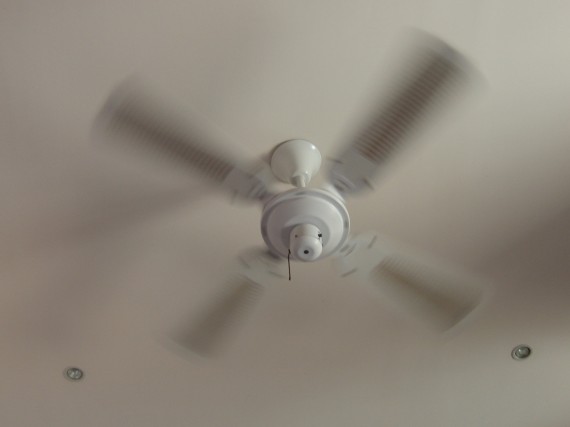
6. Perception of Movement (Stroboscopic Motion): The brain's perception of continuous movement in a rapid series of slightly varying images; this is how we perceive motion in film and animation. 

We see the fan's movement in a series of images of the fan's blades moving in different positions.